Loading...
Welcome Panache Profession Traning Limited    

Notice!

  Diets Starts In September Every Year

Approval Histroy

Nigeria College Of Accountancy

The College first opened its doors to students in 1984 at Barkin Ladi in Plateau State under an Administrative Secretary, who was then designated, Coordinator. In the very first 1984/85 set, only ten professional students were admitted. The figure dropped to four students in 1985/86, and six students in 1986/87 session, before rising marginally to fifteen in the 1987/88 session. As a result of the unusually difficult situation faced by the College in those early days, the College temporarily shut its doors in 1988. However, with the promulgation of ANAN Act in 1993, the College picked up dramatically in pace and tempo.

Currently, the College is temporarily situated at NIGERIAN COLLEGE OF ACCOUNTANCY, College of Accountancy Road, Kwall-Near Jos. It was re-opened for academic and professional work in the 1994/95 session with 54 students; 1995/96 session had 142 students and 1996/97 session had 138 students, in 1999/2000 206 students, and in the 2000/2001 session 384 students, 2001/2002 session 656 students, 2002/2003 session 821 students, 2003/2004 session 1,288 students, 2004/2005 session 1,377 students, 2005/2006 session 2,277 students, 2006/2007 session 3,200 students and 2007/2008 session 3,300 students. Its session commences in September and ends the following May. When at full-stream, the College is expected to have an annual intake of 4,000 profession students and another 1,000 practising accountants on Mandatory Continuing Professional Development, MCPD.

On graduation from the University or Polytechnic, the accounting graduate qualifies to attend the NIGERIAN COLLEGE OF ACCOUNTANCY (NCA) where he is given proper professional education and training by experienced professional experts with sound educational background. The Nigerian College of Accountancy is headed by a Director General who is a Certified National Accountant. He is the Chief Executive and Accounting Officer of the College. The Governing Board of the Nigerian College of Accountancy consists of eight (8) Certified National Accountants with the Director General as Member/Secretary to the Board.

At the College, the system of lecturing is largely workshop oriented, garnished with tutorials. Visiting lecturers with wide practical experience are invited on periodic basis to provide tutorial to complement formal lectures.

The objective of this system of pedagogy is to develop students’ ability to practicalise theoretical concepts of a given situation. Students of the College are presumed to have mastered the principles and theories of accounting at degree or higher diploma levels at the University or Polytechnic.

It goes without saying that the emphasis at Nigerian College of Accountancy is on practice and integrity, because the training procedure imparts knowledge, aptitude, skill, competence and, of course, beyond that, judgment in the application of these factors to problems in real life situation. Personality Presentation and Professional Ethics such as mode of dressing, development of personal confidence, sufficiency of self-discipline, self-analysis, self-criticism and caution which reduces the possibilities of mistakes and help acceptable ethical standards in serving the public and colleagues, end of the one year full time (nine months) course, students sit for the professional examination –PEA in January and PEB in May.

On passing the professional examinations, the student then qualifies to undertake a two-year supervised practical experience training in any sector of the economy. Thereafter, he becomes eligible to apply for membership of the Association, and if admitted as a member, he will be entitled to describe himself as a Certified National Accountant and to write after his name the designation “CNA”. At this stage, he is a fully qualified professional accountant but he cannot set up an office for private practice until he fulfils additional conditions set out here under. The Nigerian College of Accountancy is the first of its kind to be established by a body of accountants anywhere in Africa.

Message From
Association of National Accountants of Nigeria (ANAN)

Association of National Accountants of Nigeria (ANAN)
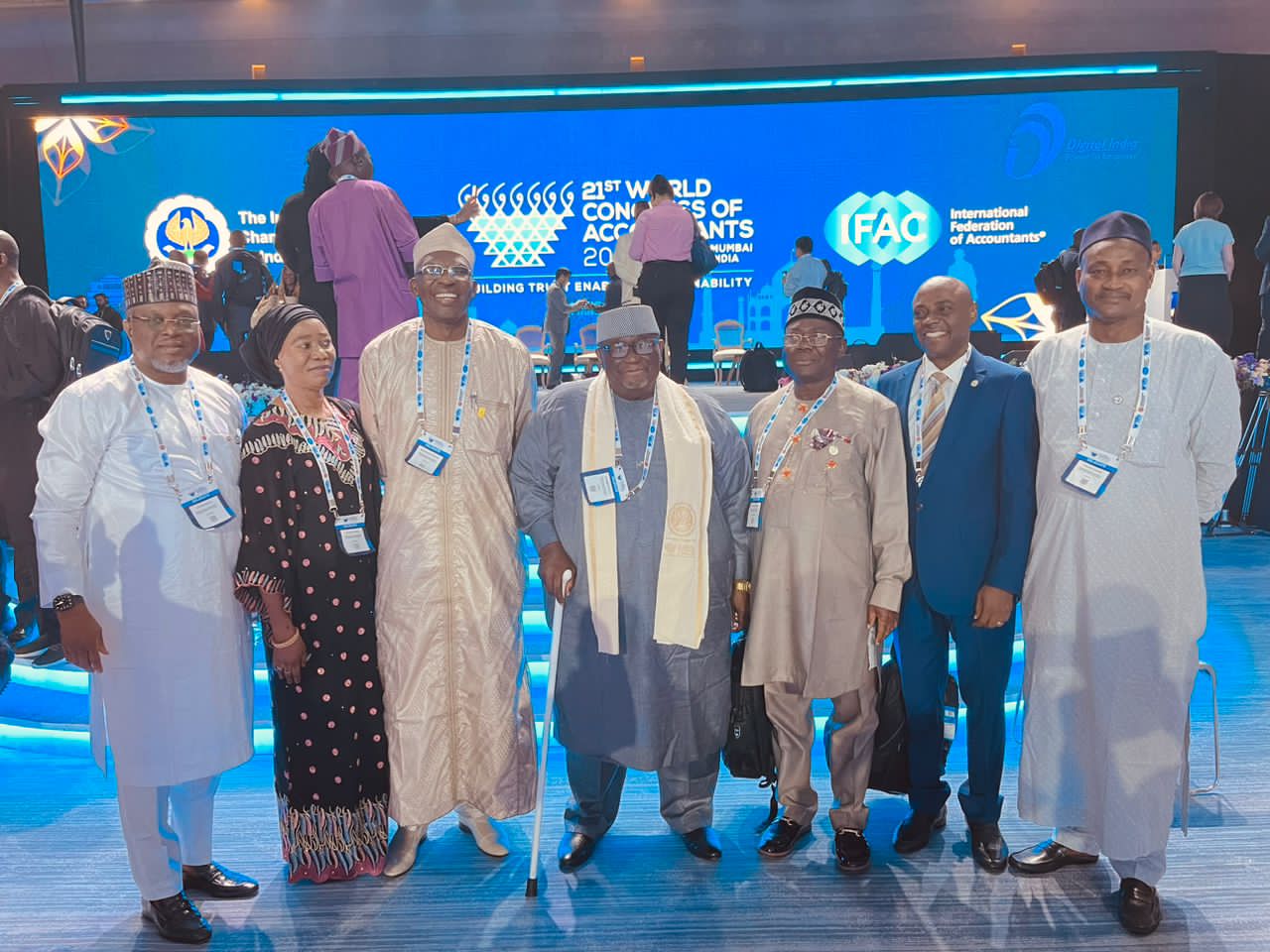
Association of National Accountants of Nigeria is the only chartered professional accountancy body in Nigeria empowered by law to teach as well as examine all its students. Besides, it is the only body having the absolute power to advance the science of accountancy.The Association was formed on 1st January, 1979, incorporated on 28th September, 1983 and was finally chartered by Decree 76 of 1993 on 25th August, 1993. The Association is a truly national accountancy body with education and training programme reflecting the national environment which would meet internationally accepted accounting standards. It was born out of a burden shared by a number of well meaning Nigerians for a home grown and home spun professional body. It sought a thoroughly Nigerian and community based approach to the definition of accountancy standards and practices.

Our Vision To make ANAN a Premium Brand of Choice in Professional Accounting Practice in Nigeria, and to impact on accounting education and practice in a profound and comprehensive manner. Our Mission To advance the Science of Accountancy in Nigeria, pioneering a multi-disciplinary emphasis in the production of well rounded, well blended, and well-honed professionals, profound in knowledge, skillful in practice, and ethical in conduct.

How to become a member?

All accountancy graduates with B.Sc. and HND from Nigerian Universities and Polytechnics, are eligible to commence a three-year training programme to qualify with the Association and earn the designation Certified National Accountant (CNA).This is similar to the system adopted by the Institute of Chartered Accountants of Scotland (ICAS). The Association also accepts specific overseas professional qualifications which are recognized under ANAN Act 76 (formally Decree No. 76) of 1993 Schedule 4.

All students aspiring to become members of the Association must attend the Nigerian College of Accountancy, Jos in preparation for the Association’s examination programme, consisting of FIVE PAPERS at Professional Examinations ‘A1 (PEA) and SIX PAPERS at Professional Examination ‘B1 (PEB) details of which are contained in the later Section Of this brochure.

Education & Training

The Council of the Association believes that the economic future of Nigeria depends largely on the commercial and industrial efficiency of its productive capacity. Therefore, the education and training of professional accountants should reflect the economic, structural and ideological environment of Nigeria. The Council, in an attempt to maintain internationally acceptable education and training standards has decided to follow the system of education and training similar to those of legal and medical professions. Accordingly, holders of B.Sc. and HND in accountancy from approved Nigerian Universities, Polytechnics, are required to attend the Nigerian College of Accountancy for nine months and pass the prescribed professional examinations.In the light of the foregoing, the Council has been able to distinguish between education and training.

Education:

Education is regarded as a generic and organic process involving a series of activities aimed at enabling an individual to assimilate and develop knowledge, skills, competencies and values that are not simply related to a narrow field of activity. Thus education allows broad range of problems to be defined, analysed and solved.

Training:

Training on the other hand, is the planned and systematic effort to modify or develop knowledge, skill and attitude through a learning experience in order to achieve effective performance in an activity or narrow range of activity. It is mechanistic, very precise and job oriented and produces observable effects in the short term. Operatives are trained.Executives are educated. Ideally, therefore, professional accountants of the 21st Century should be both educated and trained. Pursuant to the foregoing definitions of education and training, ANAN adopted from inception a straight forward approach which incorporates three basic ingredients, namely:

  • a four-year period of study of accountancy in an institution accredited by the National Universities Commission (NUC) or National Board for Technical Education (NBTE); this is the basic entry requirement into the NIGERIAN COLLEGE OF ACCOUNTANCY (NCA)
  • a one year of intensive professional education, training and examination at the Nigerian College of Accountancy.
  • a two-year period of supervised practical experience as Accountant-in-Training (AIT) in any sector of the economy. Items (b) and (c) above satisfy the three year professional training for membership of the Association.